Showing posts with label author interview. Show all posts

Thursday, September 22, 2016

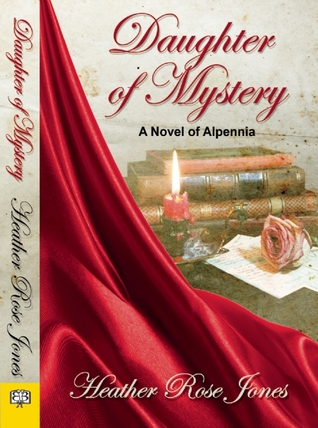
Author Interview with Heather Rose Jones


I'd like to welcome author Heather Rose Jones to the blog for a quick interview! You can find her blog, the Lesbian Historic Motif archives, and information about all of her publications on her website here. You can also follow her on Twitter!

****

1. You have two books in a series out from Bella Books. Who would you recommend read these stories? What are your plans for the rest of the series?

The Alpennia series is for readers who enjoy complex historic fantasy...or fluffy regency romance. People who like a whole cast of strong female protagonists...or people who like their characters to engage in theological debates while fleeing a charge of treason. The books aren’t entirely classifiable. My most avid fans tend to be readers who enjoy classic fantasy adventures but who are hungry for female characters--especially when those female characters might be hungry for each other. But I’ve been pleasantly surprised at what a wide audience I’ve found. Bella Books tends to focus on the lesbian readership, but I’d estimate that half of my readers fall outside that demographic. A friend of mine taught Daughter of Mystery as part of her high school English curriculum and I had burly jocks tell me how much they loved the story.

Currently the main Alpennia series is planned to be about seven books or, as I often joke, “however long it takes to get to the revolution.” I also have planned a more or less stand-alone book set three centuries earlier than the main series, and there are a number of short stories I have planned to fill in some of the nooks and crannies. The third book in the series, Mother of Souls, has been turned in to the publisher and will be released in November 2016. I’m aiming for one book a year, which is tricky given that I have a demanding day-job that I love.

2. How did you come to write LGBT+ fiction?

They always say, “write what you want to read.” I’ve been writing off and on since high school, mostly fantasy (besides all my non-fiction writing), and more and more I started gravitating toward the types of stories I just wasn’t getting in other people’s books. The final straw was when I read a fantasy novel by a well-known author that felt like it was setting things up so finally the two brave, daring heroines would end up in each others’ arms...and then the plot dodged in the other direction at the last minute. And I said to myself, “If you want that story, you’re going to have to write it yourself!”

I’m not sure that I’d characterize what I write as “LGBT+” fiction, though. I focus very strongly on female characters whose primary romantic interests are with women, although a number of them are bi. And I have minor characters who are gay men, and there’s a trans man who’s a significant secondary character. But I can pretty much guarantee that all my protagonists are going to be female. So I wouldn’t want to lay claim to writing the whole spectrum. It bothers me when people use LGBT+ as an advertising buzzword but their actual focus is much narrower.

3. What are some other LGBT+ books or authors you would recommend?

I’m going to stick to fantasy authors, since that’s my primary pleasure-read genre. Some of the authors who have been feeding my soul lately include Beth Bernobich, Catherine Lundoff, Elizabeth Bear (especially the delightful Karen Memory), T. Kingfisher’s The Raven and the Reindeer, which is utterly delightful. Aliette de Bodard’s House of Shattered Wings and its’ associated short fiction includes some same-sex relationships that are enjoyable for simply being background.

4. Along with your writing, you also run the Lesbian Historic Motif Project. Could you explain this more? 

I’m an enthusiastic amateur academic. I only missed being a professional one by the timing of marketplace forces. (Instead I work in biotech.) It’s probably a good thing that I didn’t end up a university professor because my interests are all over the map, but most of them have something to do with history. When I first started thinking about writing historical fiction with lesbian characters, I plunged into trying to find all the historic research I could on the general topic. And what I discovered is that there’s a wealth of information out there, but most people don’t know it exists. And because they don’t know it exists, either they think there were no lesbians before the 20th century, or they write historic stories with modern lesbians stuck into the middle of some other century. I’m something of a cataloger by nature, so I conceived of the idea of putting together a sourcebook for people who wanted to write lesbian historical fiction. I first had that idea back in the ‘80s, but fortunately, I waited until the internet got a bit more ubiquitous before seriously setting to work, because it’s a project much more suited to a blog than a published book.

So what I’m doing is hunting down all that research, reading it, and posting summaries that give the highlights for those who want to dig deeper. A sort of annotated bibliography, if you will. The hardest thing about research is knowing that the information exists to be found. My goal is to do that part of the legwork. And in the process I’ve found inspiration for more historic novels than I could write in a lifetime! So far, I’ve blogged 125 separate publications, including both articles and books, but my database of publications to cover includes nearly 400 entries at this point, and I add to it faster than I can blog them. Because of my own interests, I tend to focus on Europe and the Mediterranean region, and to make my life simpler, I don’t cover the 20th century.

I honestly don’t know if any other writers have found the project useful. Most people writing lesbian historical fiction don’t look back any further than the Victorian era. But I have to have some excuse for buying all those books!

Tuesday, June 7, 2016

Interview with Author Dahlia Adler


I'd like to thank author Dahlia Adler for answering my questions and agreeing to be on the blog today. I'd also like you to know that Out on Good Behavior, an f/f NA novel, is out on June 14 (Just one more week! Add to Goodreads now)!

1. Your upcoming NA novel, Out on Good Behavior, features an f/f couple. You have also written a YA f/f novel, Under the Lights. Did these characters come to you within these relationships, or did you set out to write about two females falling in love?

Very different answers for those two books, actually! With Out on Good Behavior, I always knew it was going to be an f/f book. The main character, Frankie, is Pansexual, which you know from the first book in the series, and the romance is set up in the second book. 

Under the Lights, however, originally had the main character Vanessa in a straight romance. They had zero chemistry, though, and I couldn't figure out why that storyline was tanking so hard. Then in a fit of frustration I said to my critique partner, "I feel like I just want to make her a lesbian," and it was a total light bulb moment; I didn't have to make her anything. In fact, when I went to revise the book to write it as f/f romance instead, I found that the only character she had any chemistry with was a waitress she meets early in the book. That scene is still in there, only instead of a random interaction, it's how she meets her future girlfriend.


2. Out on Good Behavior is the third Radleigh University novel you have written. Do the previous two feature any LGBT+ characters? Do readers of Out on Good Behavior need to read the first two, or do they all stand on their own?

Yes! Frankie (the main character in OoGB) is in all three books, and Samara, the love interest, is in two of them. There's also a major subplot in the second book featuring a gay male athlete, and two of Frankie's good friends in OoGB are a trans guy and a bi girl. And, of course, because it's supposed to be depicting real life, there are plenty of LGBT+ characters around campus, and the books are explicit about that.

Each book does stand on its own--they're companions, rather than direct sequels--but I do think it adds a lot to read the earlier books, especially because the romance gets its start in book 2. 


3. Why do you think featuring LGBT+ characters in literature is important? Do you plan to just focus on f/f couples in future novels, or does it just depend on the story line?

I think it's important that books acknowledge what real life looks like, and to fail to do so sends an invalidating message to the people who never see themselves in books. But LGBT+ characters in particular, especially in kidlit, are of monumental importance to me, because there are so many kids who have these feelings they don't feel safe to talk about with friends and family; they may not know anyone in real life who feels the same way. So to make sure they know that same-sex attraction and/or gender identity issues are real and valid and that they're not the only ones experiencing them, sometimes books are going to be the best company they have until they're old enough to be free to seek out like-minded people on their own.

I definitely plan to continue writing f/f couples in future novels, but not strictly so; I have plans for m/f, f/f, and m/m romance in the near writing future.


4. What are some LGBT+ novels that you are personally a fan of and would recommend to others?

I have a lot of LGBT+ novel love, but a bunch I have to shout out: Black Iris and Cam Girl by Leah Raeder, Strong Signal by Megan Erickson and Santino Hassel, Far From You by Tess Sharpe, More Happy Than Not by Adam Silvera, Simon Vs. the Homo Sapiens Agenda by Becky Albertalli, Not Otherwise Specified by Hannah Moskowitz, Everything Leads to You by Nina LaCour, Symptoms of Being Human by Jeff Garvin, Lies We Tell Ourselves by Robin Talley, and If I Was Your Girl by Meredith Russo. 


5. Finally, what is one thing that fans can do to really help an author when they release a new book?

It's so, so important to show that there's a market for these books, and nothing does that like buying or requesting from a library. Nothing can top that. (But reviewing, especially on Amazon, is pretty key too!)

***


Thank you Dahlia! Don't forget to grab one of her novels, especially teh two NA novels before  Out on Good Behavior. Keep up with Dahlia at the following places:


Website: http://dahliaadler.com/
Twitter: https://twitter.com/MissDahlELama
Goodreads: https://www.goodreads.com/author/show/7071439.Dahlia_Adler

Saturday, April 23, 2016

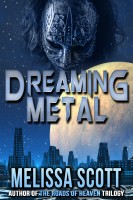
Interview: Dreaming Metal Author, Melissa Scott


Author Interview with Melissa Scott 

Questions by Lauren 

Books on Amazon

Melissa's Blog

1. You have been writing for decades now. If someone were new to your work, where would you like them to start?
That's a hard one to answer, actually, because not only have I written a lot of novels - more than 35, at last count - but they're in very different subgenres. I've written both fantasy and science fiction, far-future space opera and cyberpunk, alternate history and secondary world fantasy and mystery novels that take place in fantasy worlds. Not to mention the television and movie tie-ins! So I can't really pick one.  Let's see… If you like hard SF, I'd suggest Dreamships (freelance pilot Reverdy Jian suspects that an experimental computer construct might be true AI - and entitled to rights her human colleagues may not share). If you like space opera, I'd suggest the Roads of Heaven trilogy, Five-Twelfths of Heaven, Silence in Solitude, and The Empress of Earth. The science is based on Hermetic and neo-Platonic concepts like the music of the spheres, and in it Silence Leigh, who should be neither a pilot nor a magus, discovers that she holds the key to finding the lost planet, Earth. As far as fantasy goes, for a secondary world fantasy, you could begin with Point of Hopes (in which a pointsman - a police officer of sorts -  and a mercenary soldier join forces to discover who is stealing children across the city of Astreiant) or if you prefer more closely related worlds, there's Death By Silver, set in a Victorian London in which magic is as fussy and complex as any other Victorian profession, and two young men struggle to solve a mystery that touches dangerously on their shared past.

The thing that these books, and indeed all my books, have in common is that they're written from a queer perspective, and mostly feature queer protagonists and secondary characters. Coming out in the '80s, I was fascinated (and delighted) by the play of masks and personas in the community where I lived, a play that was at once deadly serious, self-protective, and a bravura delight, and my work is still informed by that world. I'm also consistently interested in issues of class, race, and ethnicity, and how those things play into each other, but probably the theme that runs consistently through all my work is a simple one: who gets to be considered a person? If that's a question that interests you as a reader, you can pretty much pick up anything of mine and find something that speaks to you. I hope! 

2. You have many awards -  Lambda Literary and Spectrum Awards. Was there one that really meant something to you in particular?
That's a hard one, but I'd have to say that the Spectrum Award for Fairs' Point was especially meaningful. I had begun the Points series with my late partner, Lisa A. Barnett. We had published two novels, Point of Hopes and Point of Dreams, and plotted one more before her death from breast cancer in 2006. The voice that we'd come up with for those novels was something very different from either of our individual voices, and I was afraid I could never recapture what she had brought to the series. And, of course, for a long time the idea of going back to the world that we had built together, to the characters that we had created, was really painful. But as I moved past the first hard stages of grief, it also became painful not to revisit Astreiant, and Lethe Press's editor, Steve Berman, gently encouraged me to consider at least one more book. Well, the book Lisa and I had plotted, and the story of how Rathe and Eslingen, the main characters, had become lovers, because that had originally happened off-stage, between Point of Hopes and Point of Dreams. So I wrote the latter as a novella, which Lethe published as Point of Knives, and realized that I could get back into that world, that I could find that shared voice, and that I wanted to keep the series going. Lisa and I had plotted most of Fairs' Point before she got sick, though we were stuck on one particular plot development, and I decided that I would at least try to write the full novel. I had to make a decision about that plot point - and did so with a certain amount of trepidation; if Lisa's ghost was ever going to haunt me, it was going to be for this! - but I ended up being pleased with the result. I could carry on this voice in a novel as well as at the shorter length. And so it was especially sweet to receive the Spectrum for it.

3. Along with your own novels, you have done tie-in work for classics such as Star Trek and Star Wars Rebels. How did you get into this line of work, and what is it like doing this type of writing, as opposed to your own original creation? 
I got into each of the franchises in a different way. I got Star Trek because an editor at Pocket asked me if I was a fan of Star Trek DS9 (yes) and if I'd be interested in writing for them, as they were trying to expand their stable of writers - this was back in the early '90s. So I pulled together a proposal (which became Proud Helios) and sent it off to him, expecting an answer in a few weeks. Instead, I got a call within the week, saying that he had sworn up and down that he wasn't going to do any books with space pirates, but - I'd convinced him otherwise. Needless to say, I was rather pleased!  

The Stargate novels happened when my friends and fellow writers Jo Graham and Amy Griswold proposed that the three of us turn our fannish mutterings about what should  have happened after the final season of Stargate Atlantis into a series proposal. Fandemonium, the publisher of the Stargate tie-ins, was enthusiastic, but I honestly didn't think that MGM would go for the idea of a 6-book "virtual season" - and then they did! 

The Star Wars Rebels story came about through Twitter. One of the Del Rey editors tweeted that women never asked her if they could do Star Wars novels, and weren't we out there? I immediately responded that I certainly was (I may have said something like "I would kill to write Star Wars") and as we talked, it became clear that I was a big Rebels fan, and, in particular, a Hera fan. I am still utterly gleeful that I got to write part of Hera's backstory!

The big difference, of course, is that this is work for hire - the copyright holder has absolute sway over what you write, and everything needs to be plotted out in advance in great detail. The proposal for the Rebels short story, for example, was as long as the proposal for some of my novels, and once it had been agreed to, I couldn't change anything without permission from the editors. More subtly, someone else - several someones, the writers and actor - have already done most of the hard work of establishing the character. Your job as a tie-in writer is to recreate that character, not to create it yourself; if you're very lucky, you'll get to expand on something that has already been brought in, but you almost never get to add anything completely to either the worlds or the characters. I think the challenge of matching the existing world/people is a lot of fun, and I'm always delighted when someone says "reading this is like watching the show."  To my mind, that means I've done my job.

4.. What makes an LGBT+ novel, in your opinion? 
That's such a hard question! The minute you try to define it, someone will write a brilliant novel that is obviously and unmistakably LGBT+ and yet breaks whatever rules you've just laid down.  That said… I think what makes an LGBT+ novel for me is that it's written from an LGBT+ point of view, that the story is told through an LGBT+ filter. Obviously, this can mean LGBT+ characters, preferably at the center of their own story (and preferably more than one - we don't exist in a vacuum except under special circumstances that are themselves worthy of being foregrounded in a story). I don't think that only a story about LGBT+ characters can be considered LGBT+, but I also don't think there are enough LGBT+ characters at the center of the narrative for us to dismiss this as no longer important. And I think the key thing there is that those characters should be at the center - it should be their story. For years I had a quote from Vito Russo's Celluloid Closet on the wall of my office, though I lost the tattered note when I moved four years ago: "This is what the closet is all about - translating one's natural impulses into a heterosexual language." I think the reverse — writing from the LBGT+ pov, in that language, through that filter, without translation - is what best defines it. 

5. What other LGBT+ books or authors would you recommend?
There are so many now! One of the great joys of editing Heiresses of Russ 2014, Lethe Press's annual collection of best lesbian SF/F was reading 60+ stories about queer women and not reading a single story in which lesbians were by definition evil, or who died tragically because that's what lesbians do. (And if you're looking for writers to follow, you could do a lot worse than to check out the three Lethe best-of anthologies, Wilde Stories, Heiresses of Russ, and Beyond Binary.) A hatful of random names, all of whom do wonderful work: Ellen Kushner and Delia Sherman plus a whole gang of new writers to create a serialized prequel to Kushner's astonishing Swordspoint. Nicola Griffith. Don Sakers, who also reviews for Analog. Heather Rose Jones. Geonn Cannon. My co-authors, Jo Graham and Amy Griswold. Elizabeth Bear. Jacqueline Koyonagi. Hal Duncan. Anything from Cecelia Tan's Circlet Press. And I am forgetting more than I am remembering - one of the genuinely encouraging things about the shifts in publishing over the last decade is that it has become possible for more voices that don't fit well into the mainstream to find that audience that really wants to hear them.

Tuesday, April 12, 2016

Interview with Author Tami Veldura


1. For those that are new to your writing, what would you suggest they read or check out first?

Hmm, well a new reader could easily start at a few different places. For contemporary fans: Stealing Serenity is a fun thief story with some light bondage and a lot of sexual tension. For genre fans: Blood In The Water is a pirates of the Caribbean style adventure story. Paranormal/historical fantasy. If a reader is low on cash, my military serial A Scorpion's Nature is uploaded to AO3 and available to read for free. It's over 70k, but it's not a complete narrative.

2. You have written a lot of LGBT+ novels. Did anything in particular lead you to write these stories? Why do you personally feel it's important to have books that feature LGBT+ characters?

I have! I moved into publishing LGBT work after discovering it by way of slash fanfiction. I'm still a huge fanfiction fan, though I rarely get the chance to read it anymore and almost never write. It was an amazing day when I realized I could publish, and get paid for, the work I already wanted to do in fandom. Until that point I thought I'd end up writing a fantasy or science fiction epic with a het romance.

I've always had a closer connection to fandom than the books I found in the bookstore. Which isn't to say the bookstore wasn't influential-- I grew up hording books and that habit has simply moved to the kindle app. But fandom and fanfiction explored tropes I never saw in the bookstore, and with characters I never saw. Fandom was probably my first exposure to political movements. I owe a lot to that community.

So when I discovered LGBT characters and my favorite fan tropes being published, it was a magical experience for me. From there I met (and continue to meet) people who've taught me so much of what being marginalized is all about. I'm still learning and discovering new aspects. Last year I started identifying as asexual. I had no idea such a thing existed before and without this community, I wouldn't have ever found it.

I think it's important to be exposed to these kinds of ideas and identities when you're young. If I'd had the word asexual in my vocabulary, if I'd had an opportunity to think about it before high school and college, I would have made some very different decisions. I never really felt out of place or confused when I was younger--but only because I've always kept mostly to myself and the judgement of my peers never came down on me very hard. That's very much not the case for so many kids (and adults!) 

3. Your genres are wide ranging - going from military romance to science fiction. Have you always written in a variety of genres? Do you have a favorite to write in and/or read?

I haven't actually! Growing up I was 100% a science fiction and fantasy girl. There was nothing else in my head. The first work I published, Closer Than Touch, is a military romance, but I didn't know that was a genre at the time. I had just come off of a Gundam Wing fanfiction bender and needed to express that somehow. I considered it soft science fiction, or maybe near-future fiction, for a long time.

I followed up with Baited, a contemporary story set in a small town. The book was written initially for the M/M Romance group's writer/reader event called Don't Read In The Closet (on Goodreads). I still don't know what possessed me to claim that prompt, but Baited is probably one of the most commercial books I've written.

Fanged, an anthology of vampire shorts, followed that, and that's as much a mystery as the others, to me. I wrote almost all of Fanged in the passenger seat of a truck after work over the course of a few weeks. Vampires were the thing I felt like writing, I guess. It was my first step into Paranormal and I liked what I found there.

Next was Blood In The Water, a historical/paranormal book with some fantasy leeway. This was another Don't Read In The Closet story. I never considered myself a fan of historicals, I'd never read any, but this book was probably inevitable. My father has a sail boat, I've reenacted the Elizabethan era (the Golden age of sail) for years, and the Pirates of the Caribbean fandom was one of my first. 

Military, paranormal, historical--I'd never played in these sandboxes before and a lot of my work was centered around figuring out what the hell I was doing. Spoiler alert: I still don't know. But this year is the first year I've put all my energy down behind something I feel is closer to me. Perihelion is a science fiction epic. Unlike my expectations when I was young, Perihelion doesn't have a het relationship shoehorned in. There are relationships, but they're all part of the LGBT rainbow. In a lot of ways, I feel like Perihelion is the culmination of everything that's come before it. I couldn't have written this story without the practice and experience the others gave me. I wouldn't have written such a diverse cast without first testing the waters in other books. I adore it.

I plan on spending more time in the paranormal corner of the world. Blood In The Water has a sequel in editing called Ruin and Will. I've been toying with the idea of writing a shifter omegaverse series. I'm very happy with the paths my writing has taken, even if they were unexpected.

4. What are some other LGBT+ books or authors you would recommend? 

I have quite a few queer authors that are simply auto-buys for me whenever I have the $$. E.E. Ottoman, Blaine D. Arden, Jordan L. Hawk, Alexis Hall, Aleksander Voinov, L.A. Witt, K.A. Meriken. They stretch over a lot of genres but they all write in the LGBT sandbox. All of these people are amazing to me, and I have personal relationships with several of them. I'm in awe of their work and constantly trying to reach their level of excellence.

***


Thank you so much to Tami for answering my questions! I really appreciate it. If you would like to follow Tami and her work online, be sure to check out the following links. This Friday, Tami is releasing Perihelion and it will be 99c during release week only! 

Monday, April 4, 2016

Interview with Author Geonn Cannon


I'd like to welcome author Geonn Cannon to the blog today! He was kind enough to answer the following questions for me, so please read on and leave your thoughts!

1. Since 2007, you have begun writing professionally, which is often an author's ultimate dream. What made this the right time for you to do this? 

It wasn't my decision, actually. I had been writing and submitting original stories for a while before that, but nothing ever came of it. Then I wrote a novel called "On the Air" and I was posting it to a website chapter-by-chapter. The site's archivist was reading it and contacted me, said she worked for a publisher, and if I wanted to get it published she could put in a good word for me. A month later, the publisher accepted the manuscript. It was just a case of the right story at the right time.

2. You have published 30 novels in your career. Do you ever celebrate at a certain milestone? Do you have a number of books that you would love to reach or surpass?

I always celebrate a publication, even if it's just a small thing like having some ice cream or splurging on a movie. My goal was to have one novel for every year I've been alive, and I'm actually going to surpass that by my next birthday this December. My 2017 releases should push me over the edge where my age is smaller than the number of books I have in the world.

3. You have won two Golden Crown Literary Society Awards, and you noted that you are still the only man to have won a Goldie. Do you know why this is, and do you hope to win another in the future?

I think it's for the same reason the Goldies (and other events like them) exist. Novels written by and about women and/or homosexual romances tend to be overlooked or dismissed from other awards. They exist as a place where these writers and novels can get the recognition they deserve. The reason straight men don't tend to win Goldies is because the competition is full of amazing, talented women. Being recognized alongside them is a huge honor and the biggest compliment my writing can receive. I definitely hope to win more! I have high hopes for a few novels that are/will be eligible for the next award ceremony. Fingers crossed!

4. Since you have written so many titles already, do you have favorite books or ones you recommend people read first when they discover your writing?

I do! I write in a wide variety of genres, so sometimes I can tell what someone will be drawn to. If I think they'll like a dark antihero, I push them toward "Girls Don't Hit." If they have scifi and steampunk all over their Facebook, it's "Trafalgar & Boone." But my go-to suggestion is always "The Rise and Fall of Radiation Canary." It's the book that I feel encompasses my career and my talent, and it includes everything I wanted to put in a novel when I first started writing. It has romance, it has someone finding a happy ending outside of a relationship, it has breakups and heartbreak, and it all takes place in Seattle (which I think is the most beautiful city in the world).

5. When reaching out for this interview, I was looking for authors that wrote LGBT+ literature, so how does your work fit that "genre"?

All of my novels feature women, first and foremost. I've always loved writing female characters and I was drawn to female characters in the shows I watched, and writing lesbian romances gave me a chance to double the number of women in my books. I've always said that I wanted to write stories about women who happen to be gay rather than focusing on that sexuality. Riley Parra is a cop fighting demons, and she has a girlfriend. Karen Everett and Lana Kent start a band, and they're attracted to each other. Claire Lance is a former cop on the run after being framed for killing her lover, who happened to be a woman. Their sexuality is important, but only as important as it is for anyone in their day-to-day lives. They aren't struggling with their sexuality, their goal isn't to come out to their friends and family. They're past that and they have other hurdles to overcome. That's what I try to write. I want to write about awesome women doing amazing things, and occasionally they might kiss another woman. 

***

Thanks to Geonn Cannon for answering these questions! Be sure to follow him on the following sites to keep up with his latest releases!

Wednesday, March 23, 2016

An Interview with Author Carlos Allende


Nineteen-year-old Josie García is torn between true love with a down-and-out poet and the monetary stability that only a rich husband can provide. She owes rent—two months—and while her little landlady is docile enough to pretend that she has forgotten about the money, she’s also a self-taught witch, planning to chop Josie’s head off and use it as the main ingredient in a potion to recover her lost youth and become the beautiful woman she never was.
Creepy, campy, and yet incredibly lyrical, Love, or the Witches of Windward Circle is a wildly imaginative tale that spans five decades, connecting the otherworldly occult to the out-of-this-world bohemia of fifties Venice Beach.
To learn more about the book, and how to purchase a copy, please visit this link! The author, Carlos Allende, will be a panelist at the LA Festival of Books on April 10, if you will be attending! And now, an interview with the author himself!
You stated that your characters are not actually gay, but instead, they are an allegory of what it means to grow up gay. How did this idea come to you?

The allegory came up unconsciously. I wanted to write about witches, inspired by the Malleus Maleficarum, a treatise on the prosecution of witches from the 15th Century, and bring it to modern times. I was working in Venice at the time so I ended up bringing the story to Venice in the late 1950s. The two main characters are an old and nameless little woman that dreams of becoming young again, and her chosen victim, Josie García, a 19-year-old that longs to catch a good husband. What both really want is to be loved and accepted. One thinks she only needs to be beautiful to succeed, and the other that being beautiful is all she should need. The nameless little woman suffers through all of her life because she’s different: she’s clumsy and unattractive, and cannot be what she was supposed to be, a beautiful witch like her sisters. 

Thus, she spends her life living in the shadows, growing bitterer and bitterer as the years pass by, just like a closeted gay person. The visit to the Sabbath represents a young man’s first visit to a gay bar. She’s excited, yet terrified about something she sees as utterly corrupted. Josie, on the other hand, is like a young and immature gay man that has accepted his sexuality and is conscious of his own good looks but is confused and damaged because of growing up in a society that rejects his kind. She’s selfish and self-centered, says hurtful things and does not realize that to be accepted one must accept others first. 


How would you describe your novel Love, or the Witches of Windward Circle to someone who does not know you?

Witches and beatniks. A horror farce set in Venice, California, throughout the first half of the 20th Century. It’s a fantasy for those that don’t necessarily like fantasy or horror. The novel is written in two levels: In the superficial one, it’s a campy dark comedy, full of eccentric characters and over-the-top situations. In the deeper one is about the need to belong. The Love in the title is not so much about romantic love, but fraternal love or bonding, the satisfaction that comes from membership to a group.


Are you currently working on anything else that you hope to publish?

Yes: “Coffee, Shopping, Murder, Love” a dark comedy / psychological thriller about a closeted gay Indian bookkeeper that starts killing his coworkers. He and his tormented southern boyfriend embark on a road trip to get rid of the bodies. Natural Born Killers meets Little Miss Sunshine meets John Waters? It is about living in shame, jealousy, envy, white and heterosexual privilege, and again, our need to belong.

What LGBT+ books or authors would you recommend?

Alan Bennett! He’s my favorite author and not because he’s gay but because he’s an incredibly good story-teller. His novels are not action packed but emotion-packed, yet only pleasant and extravagant emotions. Reading his work is like floating in a lazy river that crosses the jungle while you admire the scenery around you: oh, there’s a jaguar, and is that a python snake in that tree? He points to the absurdities of life with elegance, subtle irony, and wit.

Were you afraid that people would reject your characters’ unpleasant features?

I was, but my goal was to make inherently unlikable characters likable, and I didn’t want to chicken out. The little nameless woman becomes a serial murderer and a devil worshipper; Josie says awfully racist and hurtful things. I wanted to play with the readers’ emotions and instead of making them just passive observers of the heroines' journey, make them cringe with their every step but still care for them. Based on the feedback I’ve got so far, I think I succeeded. Most feel sorry for the little woman:  “Despite going out of her way to perform some downright evil deeds the little woman is the character I felt the most for during the course of the book.” (Walker, 2016) And Josie’s immaturity is precisely what makes her human. She represents the prejudice and ignorance that are far too common among young latino women—the novel is too a social critique. Literature is full of heroines that set a good example: they’re brave, passionate, have high moral standards, and always fight for social justice. 

Life is nothing like that! It wasn’t at all the 1950s. Josie is a product of the times she lived. She sets the example of what not to do: She lies, she cheats, she steals, she says mean things intending to hurt, but not because she’s evil, but because she’s immature and jealous. Still, the journey can be a fun one if you can enjoy the twisted sense of humor. Josie’s love rival is Eva, a Polish holocaust survivor. While I was doing research for the novel I learned that many had relocated to Venice in the 1950s, and I was shocked to learn how much rejection they still suffered, even after the horrors of the war had become known by Americans. Josie’s unjustified jealousy and animosity towards Eva exemplifies the absurdity of such rejection. Josie hates Eva not because Eva is Jewish but because she’s jealous of Eva’s good looks, yet Josie chooses to attack Eva based in her ethnicity, while Josie herself is too a victim of racism. The challenge was to make the readers laugh at the irony and still feel for Josie. I purposely chose Jewish editors to see if I had gone too far. They understood the joke.
***

Find more from the author at the following places:

Saturday, March 12, 2016

Interview with Author Tiffany Rose


I'd like to welcome Tiffany Rose to the blog today. She writes a science fiction story titled Bone Diggers on Wattpad. She will also be releasing her novel Hello World (the first in an adult science fiction series) in the fall, from Pandamoon Publishing.

1. For those that don't know, tell us a little about your writing and how you feel it fits the LGBT+ spectrum?

My bio reads, “I write about magical girls and the morally gray”, but what would be more accurate is I write LGBT+ leads. Every novel coming out, or currently on my to be written list has main character representation. Bone Diggers has a bisexual lead, Hello World has an asexual lead. I also have a fairytale retelling with an aromantic lead, and another video game inspired story with a demi-girl lead. I think it’s important to show LGBT+ characters, and the diversity within the spectrum. Readers will also find representation scattered throughout, but having ignored groups telling the stories is especially important, even in heavy science fiction or fantasy.

2. What are some of your favorite LGBT+ books and authors?
This year, I’ve decided to read exclusively works with LGBT+ characters or
authors on that spectrum. I just finished reading From Under The Mountain by Cait Spivey. It was wonderful to read high fantasy with representation, but without the sexist and harmful tropes I normally have to ignore. Other favorites this year include anything by Rachel Sharp. I’m on my third book from her right now.  
3. Your website states that you do design as well as write. Do you design your own covers? What is some work you have done in the past?

I do! Sometimes authors have zero say in their cover design, but thankfully so far I’ve gotten say (or complete say) in the matter. That is in large part because of the indie and wattpad elements. But, I’ve even been known to make a cover before I’ve written down official words. Sometimes because of NaNoWriMo and sometimes because it’s just fun. The Bone Diggers cover was designed by me, and you can find several more covers at Design Over Chaos.

4. You also run a Tumblr website all about asexuality. What made you start this? What information can people find on this site?

Fuck Yeah Asexual was originally created to help me figure out my own feelings on the matter. It was a way I could collect little posts about asexuality and share them in a way that wasn’t outing myself. But now, it’s three years later and the blog is solely around to spread asexual awareness and pride. Most of the site’s popularity came from activist moments, we took a strong stance for asexual, aromantic, and agender inclusion and peopled rallied to protect all a- people. It’s also a continuing reference location for books with asexual characters, articles about intra-community issues, and really anything else asexuality related.  


***


Thanks to Tiffany for answering my questions! I love that she has a blog about asexuality, because it's a topic that people tend to forget when thinking of LGBTQIA.


Be sure to keep up with Tiffany and all she is doing at the following places (more links to be found here):

Art Over Chaos website - https://artoverchaos.wordpress.com/